Agent Builder
The Agent Builder is the visual workflow authoring environment used to design and maintain Agents within IB-X.
It provides a graphical workspace for building automation workflows, AI-powered processes, integrations, human-in-the-loop workflows, and enterprise orchestration solutions.
Using Agent Builder, users can define:
- Workflow execution paths
- Business rules
- Decision logic
- Human tasks
- AI interactions
- System integrations
- Process automation logic
The visual design experience improves maintainability, collaboration, troubleshooting, and operational visibility across automation teams.
Whether you are building a simple automation workflow, an AI-powered Agent, a business process involving multiple stakeholders, or an enterprise integration workflow, Agent Builder provides the tools required to design, test, and maintain the solution.
Enabling Agent Builder Feature
The Agent Builder feature is not enabled in the AI Command Center by default.
Administrators must activate the feature before users can create or edit Agents.
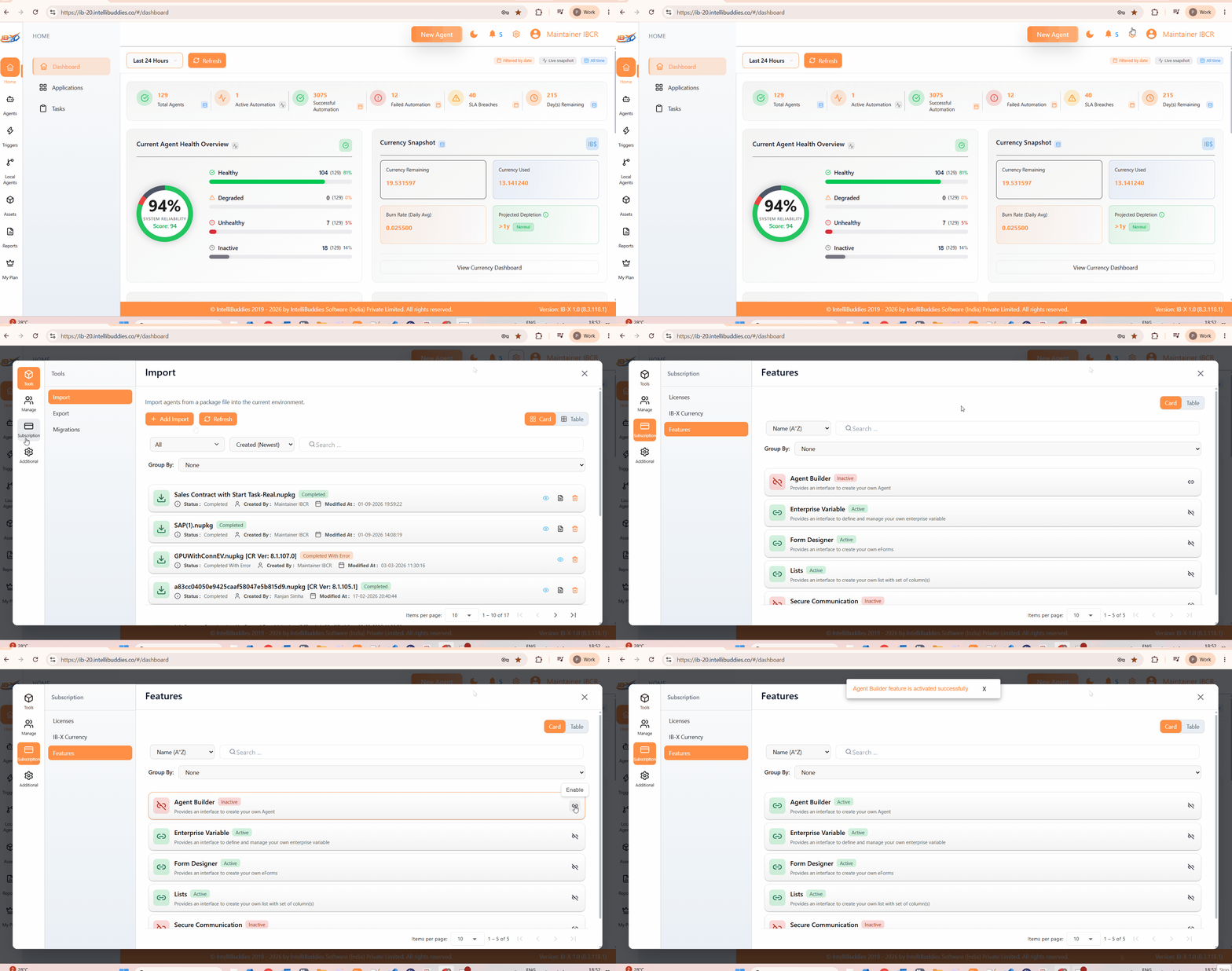
To enable the Agent Builder feature:
- Log in to the AI Command Center with Administrator access
- Navigate to Administrator → Features
- Activate the Agent Builder feature
The Agent Builder feature is available only if it is included in the AI Command Center license.
Opening Agent Builder
Agent Builder opens automatically whenever you create a new Agent or edit an existing Agent.
A new Agent can be created using the global New Agent action available throughout the AI Command Center.
Existing Agents can be opened for editing from the Agents page.
Once opened, Agent Builder provides the workspace used to design, configure, test, and maintain Agent workflows.
For information about creating, editing, testing, publishing, versioning, and managing Agents, see Agent.
Agent Builder Toolbars and Panels
Once Agent Builder is opened, you can use the designer environment to create and manage workflows.
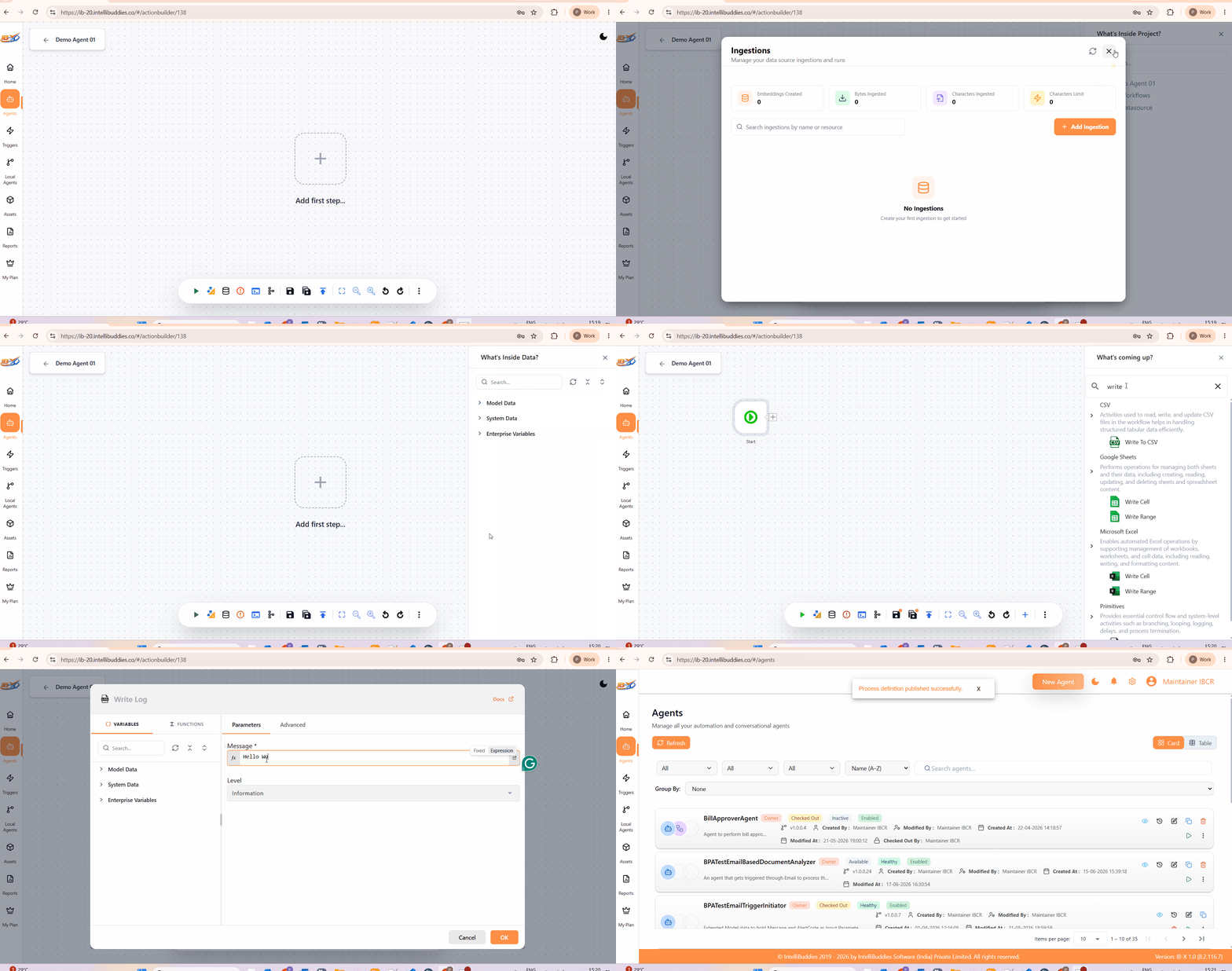
The Agent Builder consists of multiple toolbars, panels, drawers, and design surfaces that work together to provide a complete workflow design experience.
Main Components
- Agent Builder Canvas
- Designer Command Bar
- Project Explorer
- Activities Drawer
- Process Data Drawer
- Email Templates
- Forms
- Workflow Parameters
- Error Drawer
Typical Workflow
A typical Agent design workflow consists of the following steps:
- Create or open an Agent.
- Design the workflow using the Designer Canvas.
- Configure activities using the Activity Configuration Dialog.
- Use Process Data and Activity Outputs to build dynamic workflows.
- Test the Agent using a Debug Automation.
- Publish the Agent when it is ready for use.
For detailed information about Agent lifecycle management, see Agent.